
On This Page
What Is IdeaProof, and How Does It Help? What Is NELL, and How Does It Help? Quick Validate DeepValidate Launchpad Pro Builder The Tiers at a Glance IdeaProof vs NELL: The Core Differences Which One Should You Pick? FAQsSince you’re here comparing IdeaProof vs NELL, I’m assuming someone recommended them, or you’ve tried one and are considering the other. You probably already know that both help assess business ideas and develop plans. So what exactly is the difference?
The difference worth caring about, and this is the basis on which you should compare them, is what you need after the assessment.
IdeaProof combines research with business planning, branding and marketing materials. NELL focuses on connecting that research to product decisions, buyer outreach and execution.
Let’s look at what you actually get from each and which one makes sense when.
What Is IdeaProof, and How Does It Help?
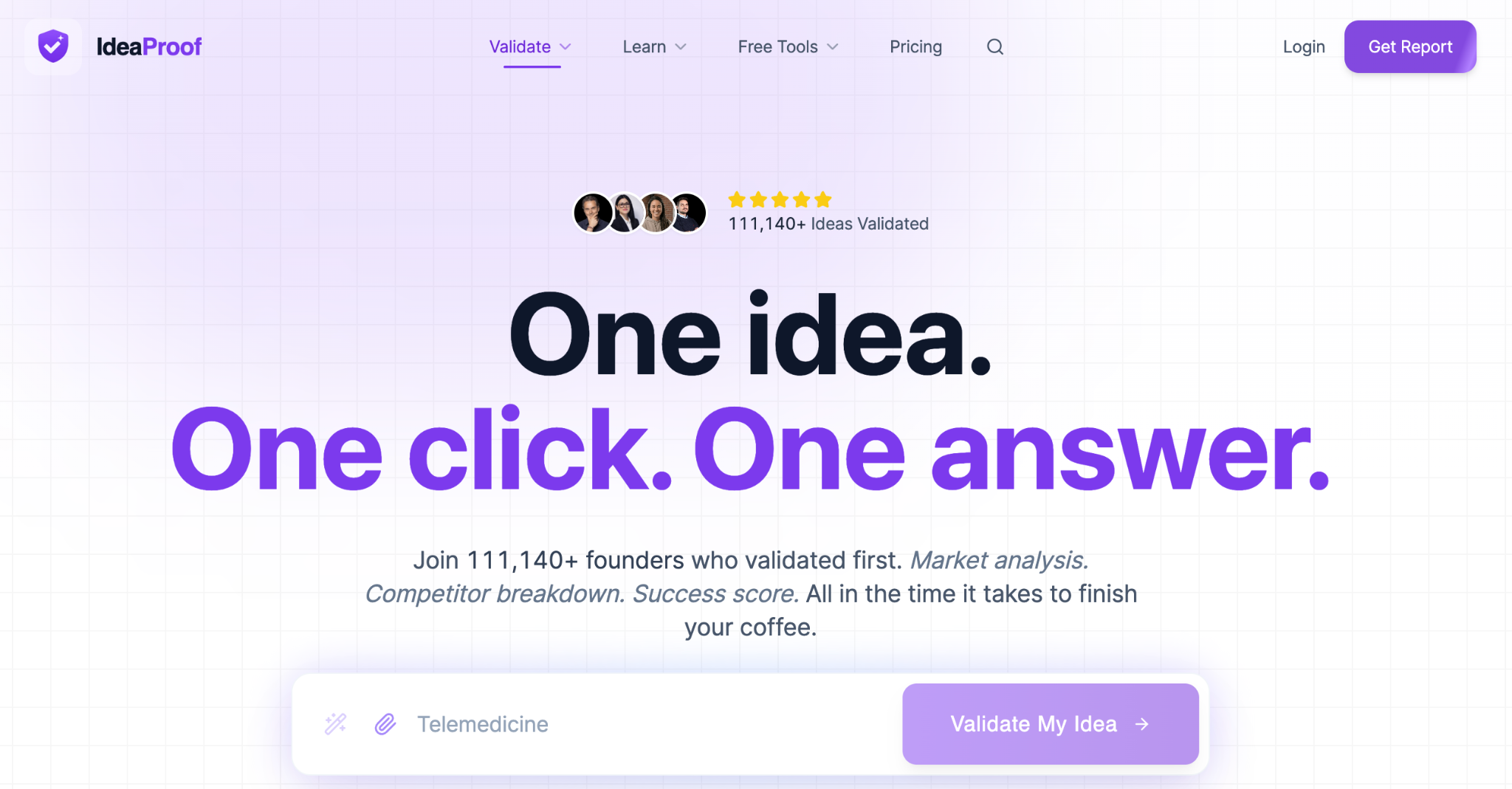
IdeaProof assesses your idea’s market, competition, feasibility and risks, then lets you continue into business planning, brand strategy, visual identity and marketing materials.
This includes more than a score. You can generate financial projections, positioning, brand names, logos, colour palettes, advertising copy and email sequences. The appeal here is having the assessment and the materials around the business in one workspace.
Its market analysis includes sizing, audience research, competitor positioning and pricing recommendations. So it’s less about choosing between branding and research. Both products address the business case. The difference here is what they help you do afterward.
Pros. IdeaProof’s breadth makes sense when you need to develop the proposition and prepare how to present it. It also publishes its scoring rubric, so the calculation is available to inspect rather than being entirely hidden.
Limitations. Later outputs use additional credits; the free assessment does not include the complete suite. A polished plan does not demonstrate demand. IdeaProof acknowledges that its score is not a probability of business success and that no outcome study has been published.
Pricing. Start free with 40 credits. Paid plans start from €19.99.
What Is NELL, and How Does It Help?
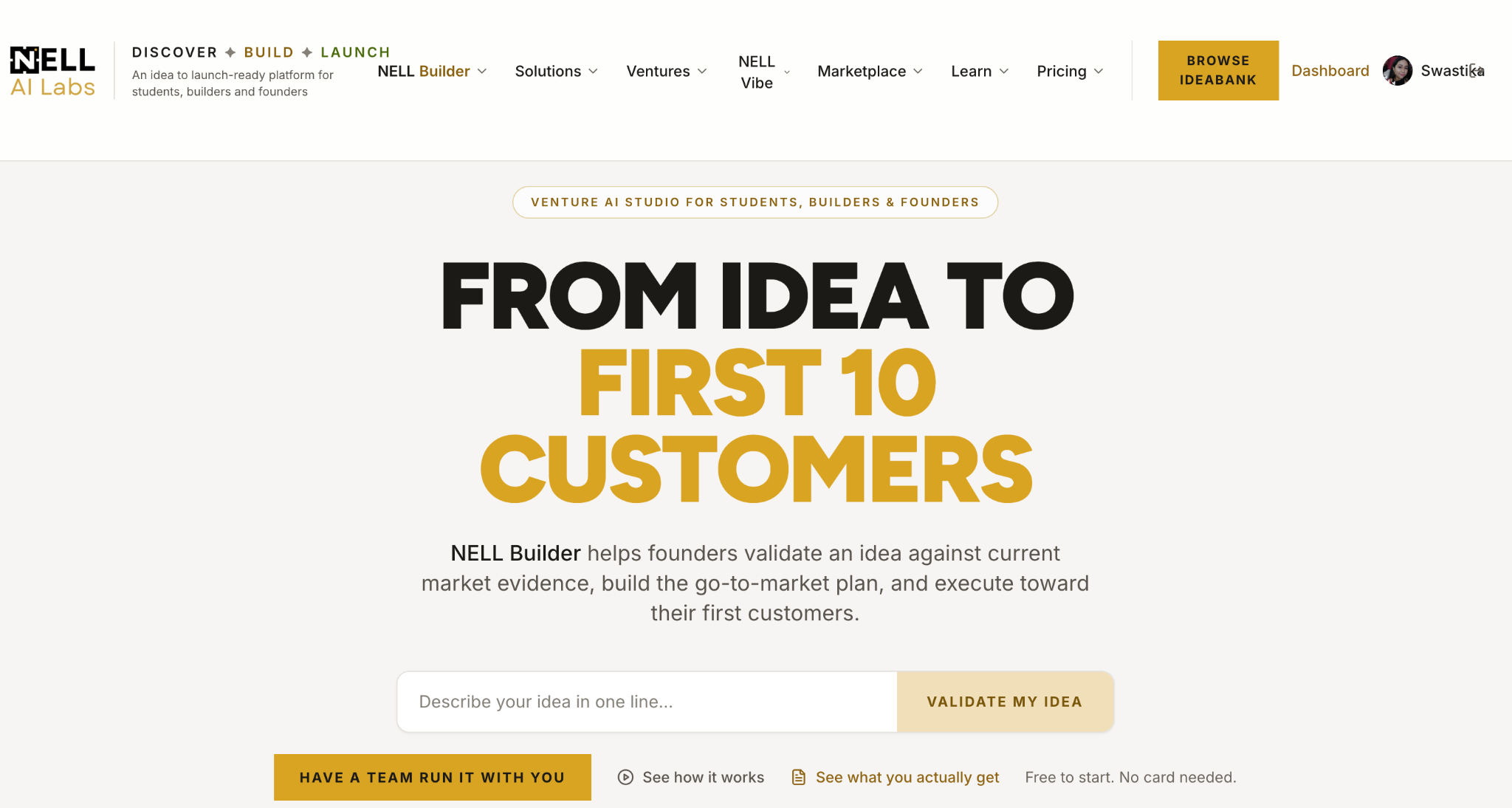
NELL Builder connects the assessment to what to build, who to sell to and how to reach buyers. It provides progressively deeper research, planning and execution support.
The distinction needs to be more specific than “it also produces a plan.” IdeaProof already does that. NELL’s strength is the operating detail underneath: a sellable product scope, named target accounts, buying roles, outreach, acquisition tests and playbooks you can run with operators.
Here is what that looks like in practice, tier by tier.
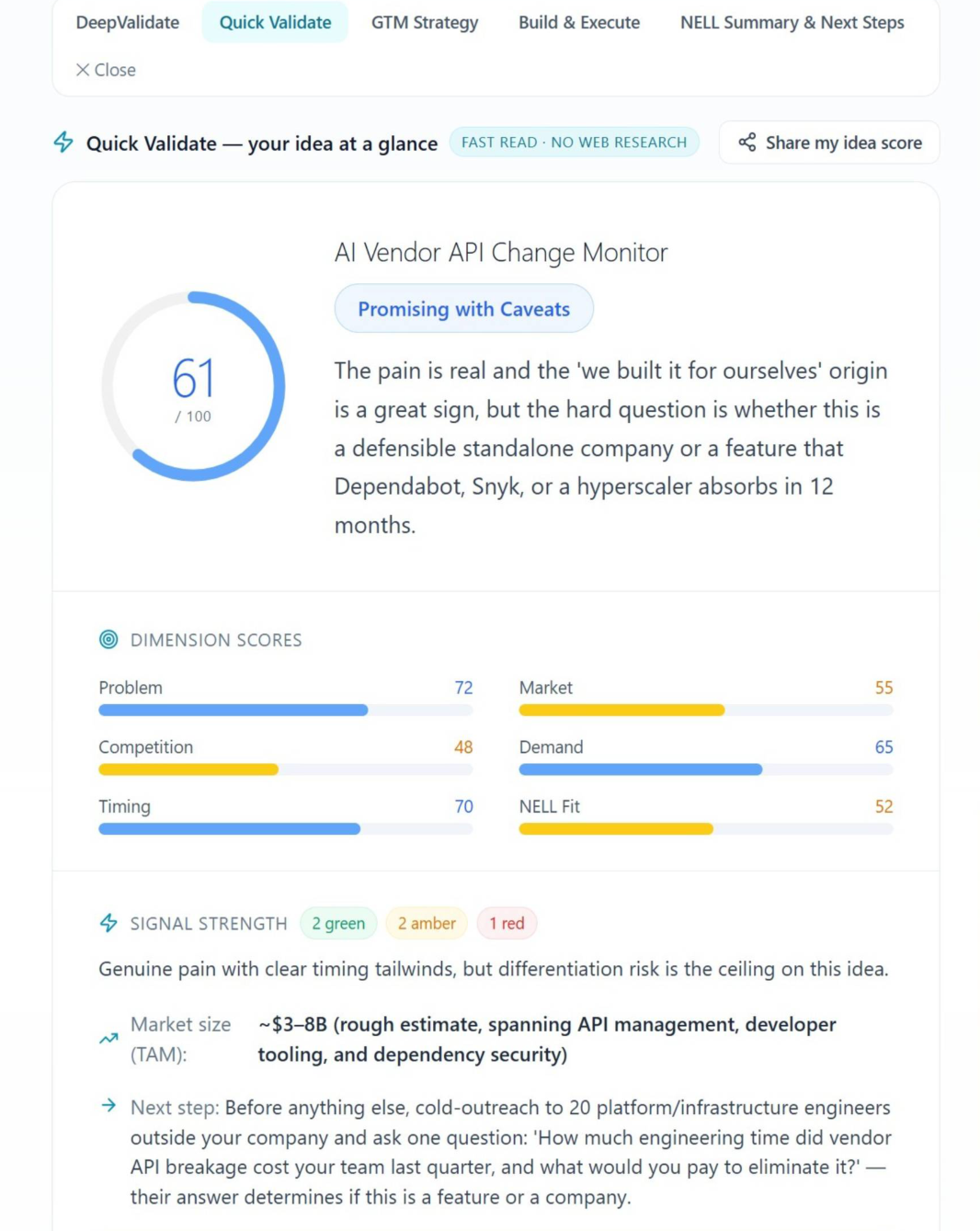
Quick Validate (Free): Your Idea at a Glance
Before you pay a cent, Quick Validate gives you a fast first read. A 0–100 score, a dimension-by-dimension breakdown, a green/amber/red signal read, a rough market estimate, the biggest unknown and a concrete next step.
This is not live web research. It is the initial assessment that helps you decide whether an idea deserves a deeper investigation. The sourced research comes next.
DeepValidate ($49): The Same Read, Now Sourced and Deep
DeepValidate is where the live research starts. The plan assesses 11 scored dimensions across five pillars, backed by market research, competitor analysis and a downloadable PDF report.
Here are the parts worth looking at, and what each is actually for.
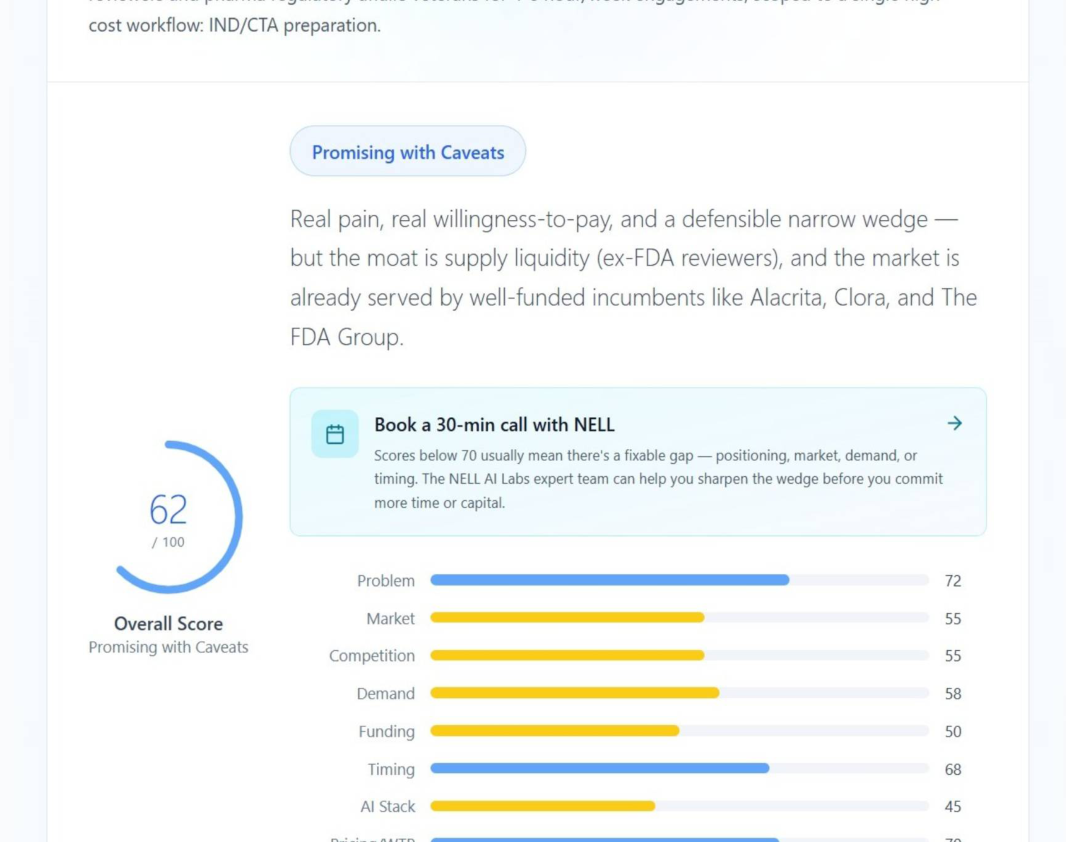
The verdict, scored and sourced. The report breaks the idea down across problem, market, competition, demand, funding, timing, the AI stack, pricing, economics and related commercial questions. You get the reasoning behind the score, including the uncomfortable parts.
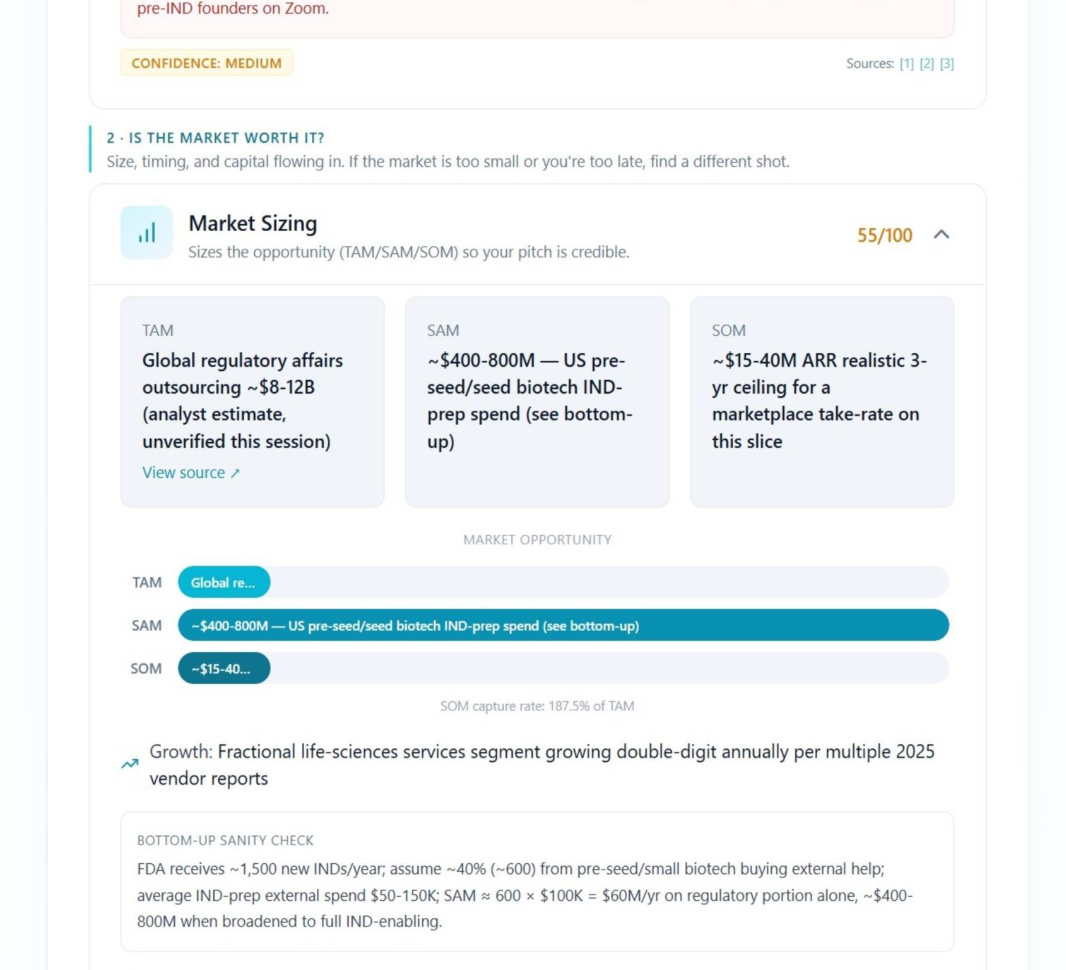
How big the market actually is. TAM, SAM and SOM, with sources and a bottom-up cross-check. The revenue ceiling makes the assumptions about customers, price and achievable reach visible. You get a market estimate you can examine, rather than only a headline number.
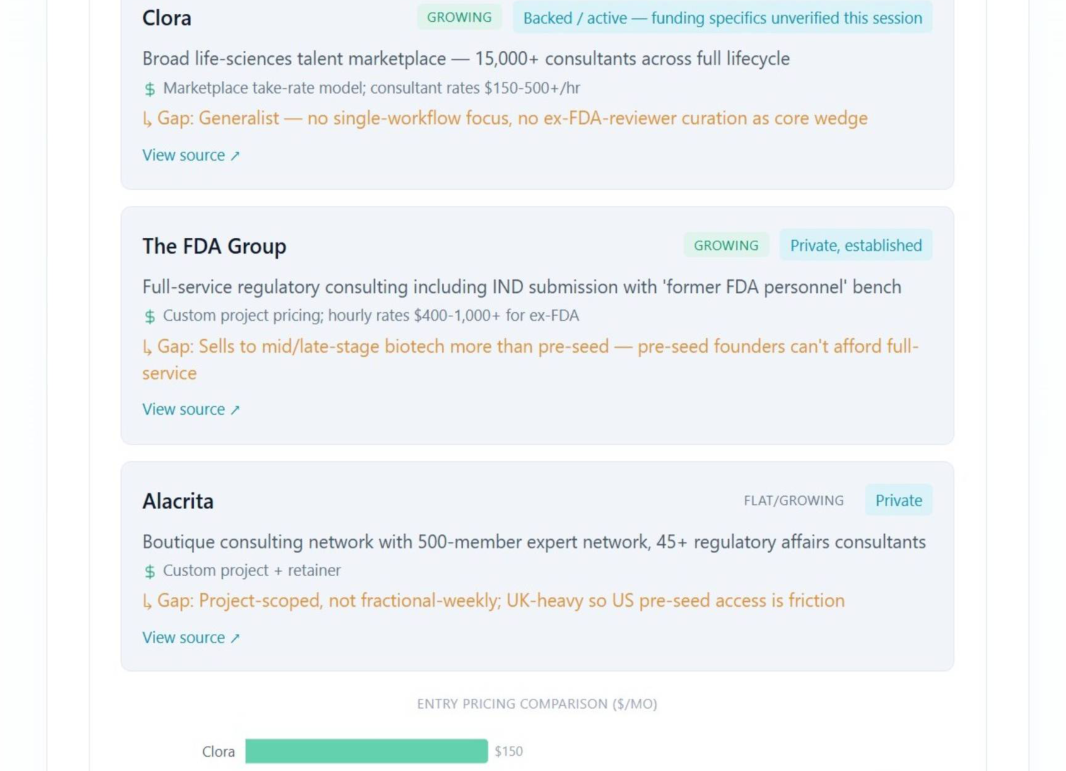
How crowded it is, and where you could compete. A named competitor comparison and a white-space map separate contested, emerging and potentially clearer opportunities. The useful output is a specific difference to investigate, not simply “there are competitors.”
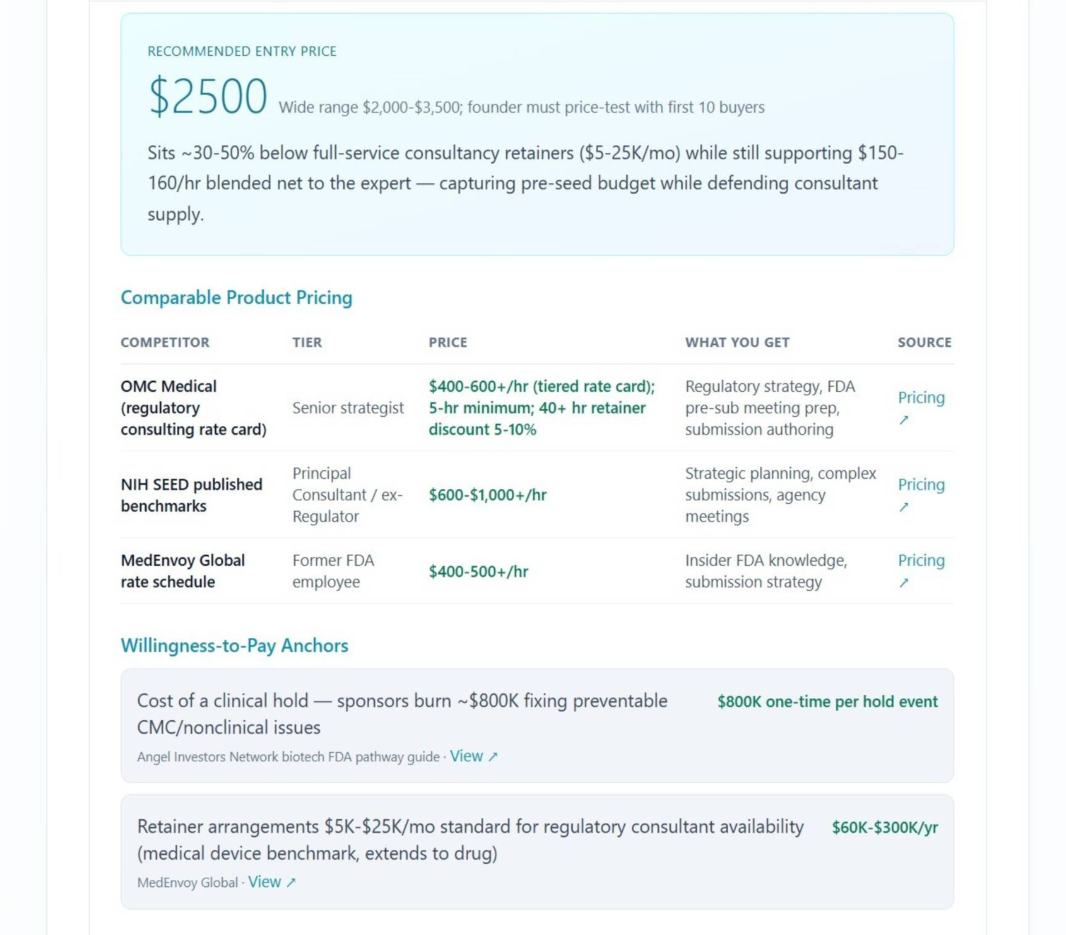
What to charge, and what backs the number. Comparable pricing, willingness-to-pay anchors, price-sensitivity signals and a recommended revenue model. These give you a starting price to test and the reasoning behind it. They do not mean customers have already agreed to buy your version.
The uncomfortable truths, in writing. Findings come with sources, confidence labels and gaps in the evidence. The “brutal truth” sections are there to keep the recommendation from becoming a collection of reasons to do what you already wanted to do.
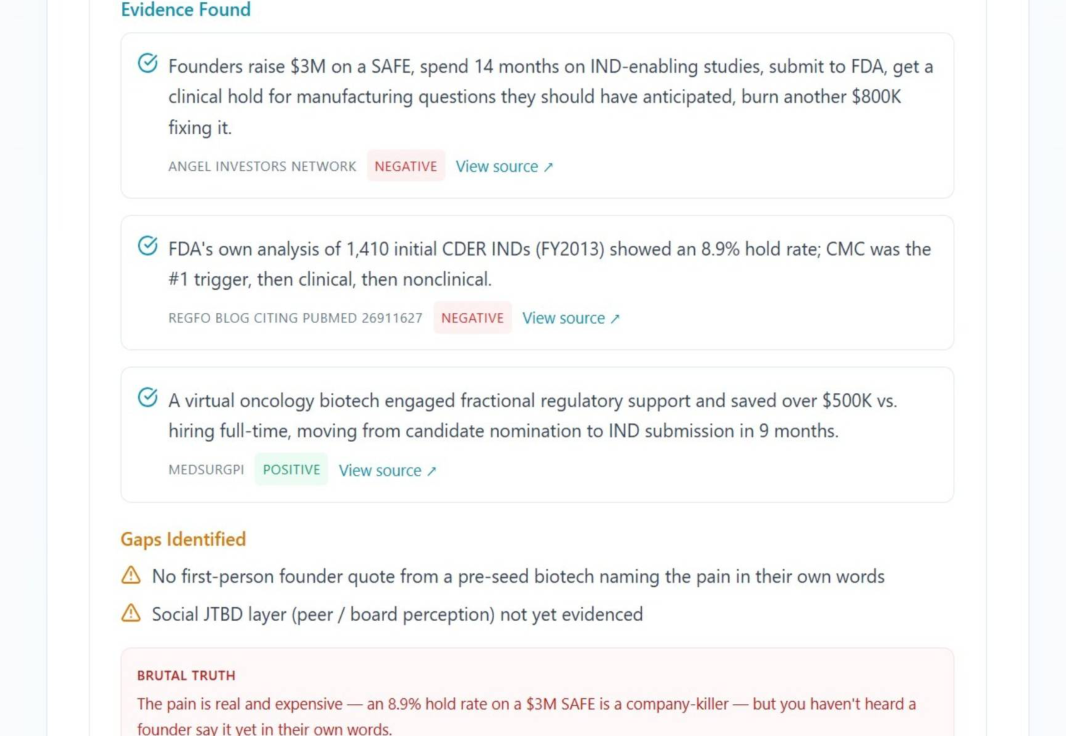
It also examines unit economics, including acquisition cost, lifetime value and payback; the proposed AI stack and technical risks; and regional market considerations. Those models and risk assessments help identify what to investigate next.
Pricing: $49 for the first two DeepValidate reports, plus three IdeaBank briefs.
Launchpad ($149): The Verdict Becomes a Plan
One level up, NELL carries the research into a full go-to-market strategy and build plan. This is where the output becomes much more useful to the founder who has decided to pursue a direction and now needs to act.
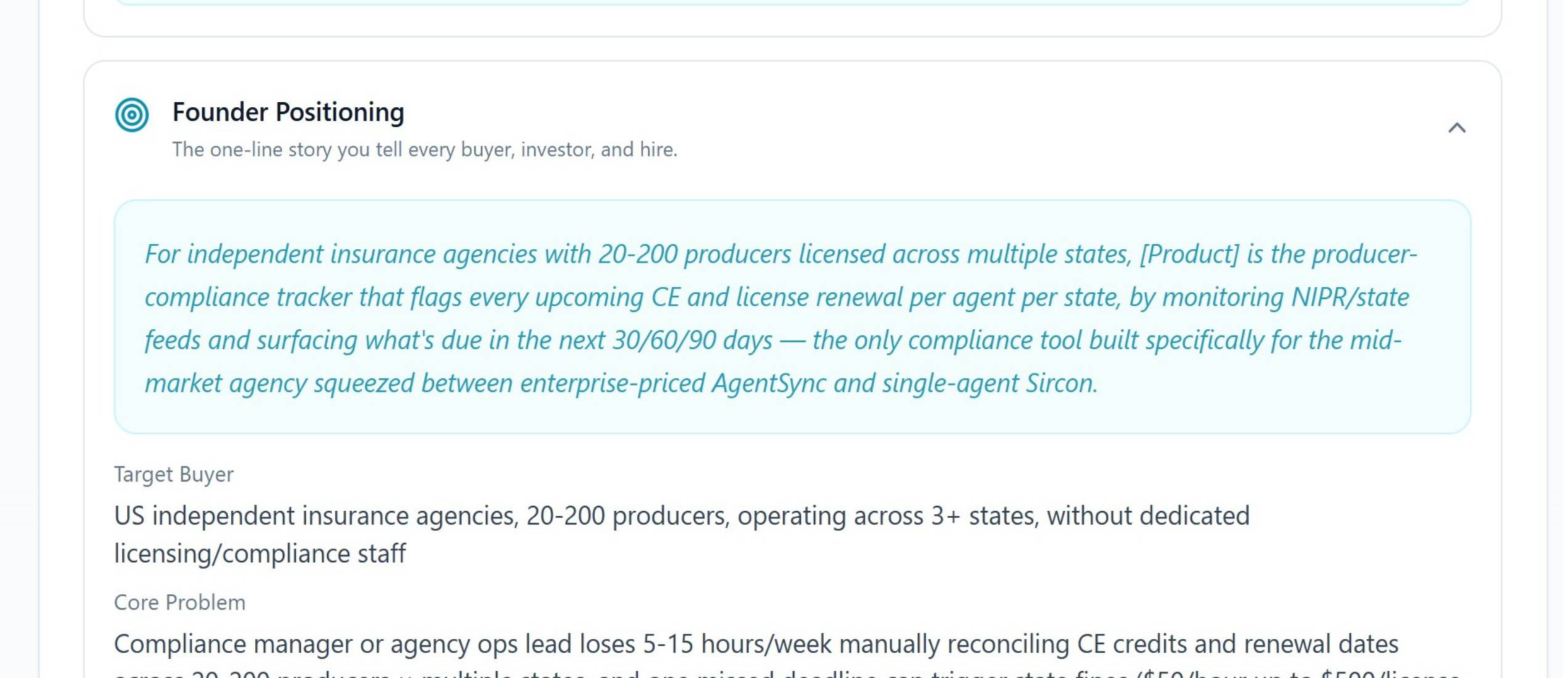
Your positioning, and the words to say. A one-line positioning statement and message variants built around a specific buyer. You get language to put on the page, in the pitch and in front of prospects, with versions to test instead of a blank document.
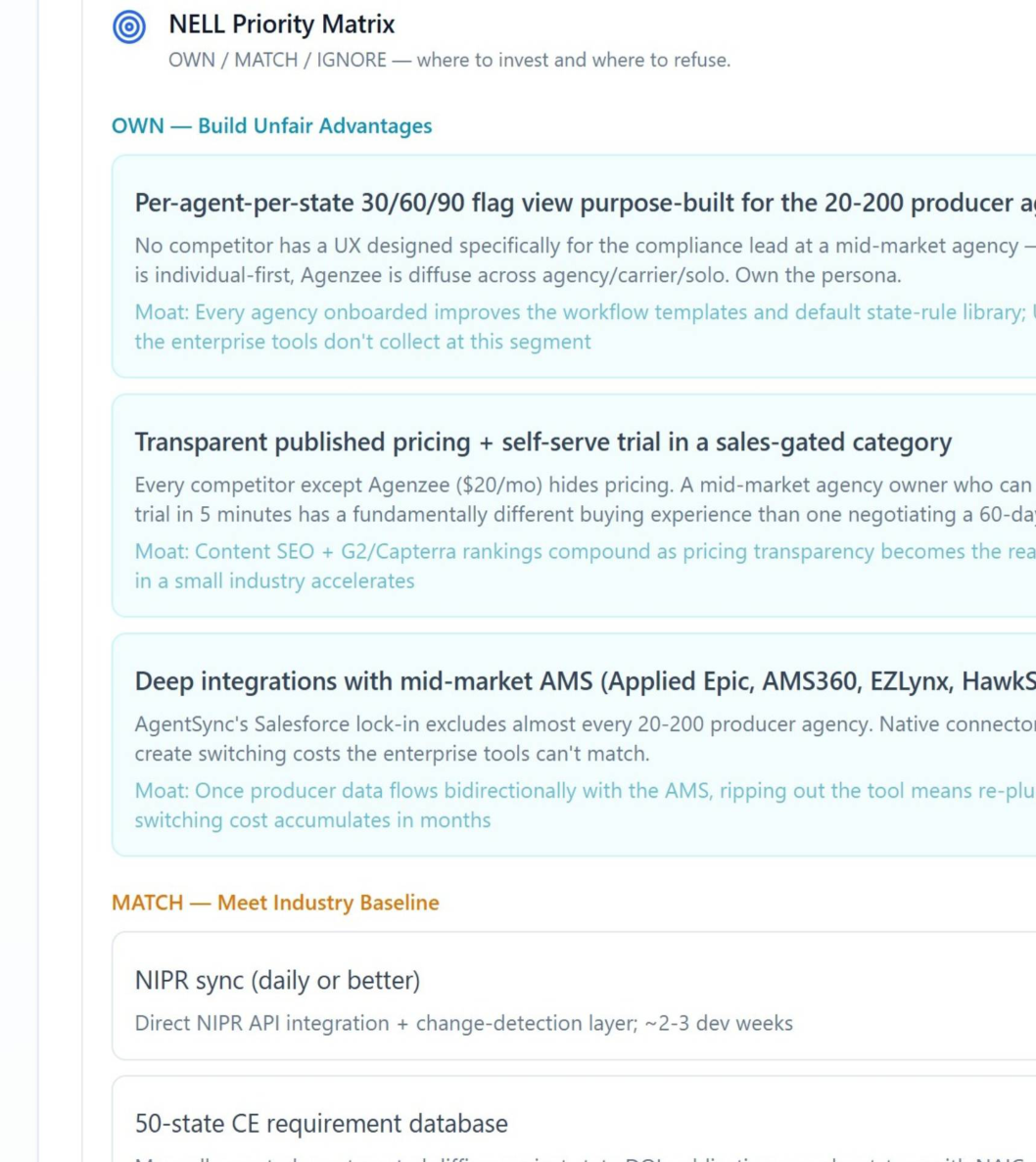
Where to invest, and where to refuse. The OWN / MATCH / IGNORE matrix separates where to build an advantage, where meeting the baseline is enough and where you should avoid spending. Useful when every possible feature starts sounding essential.
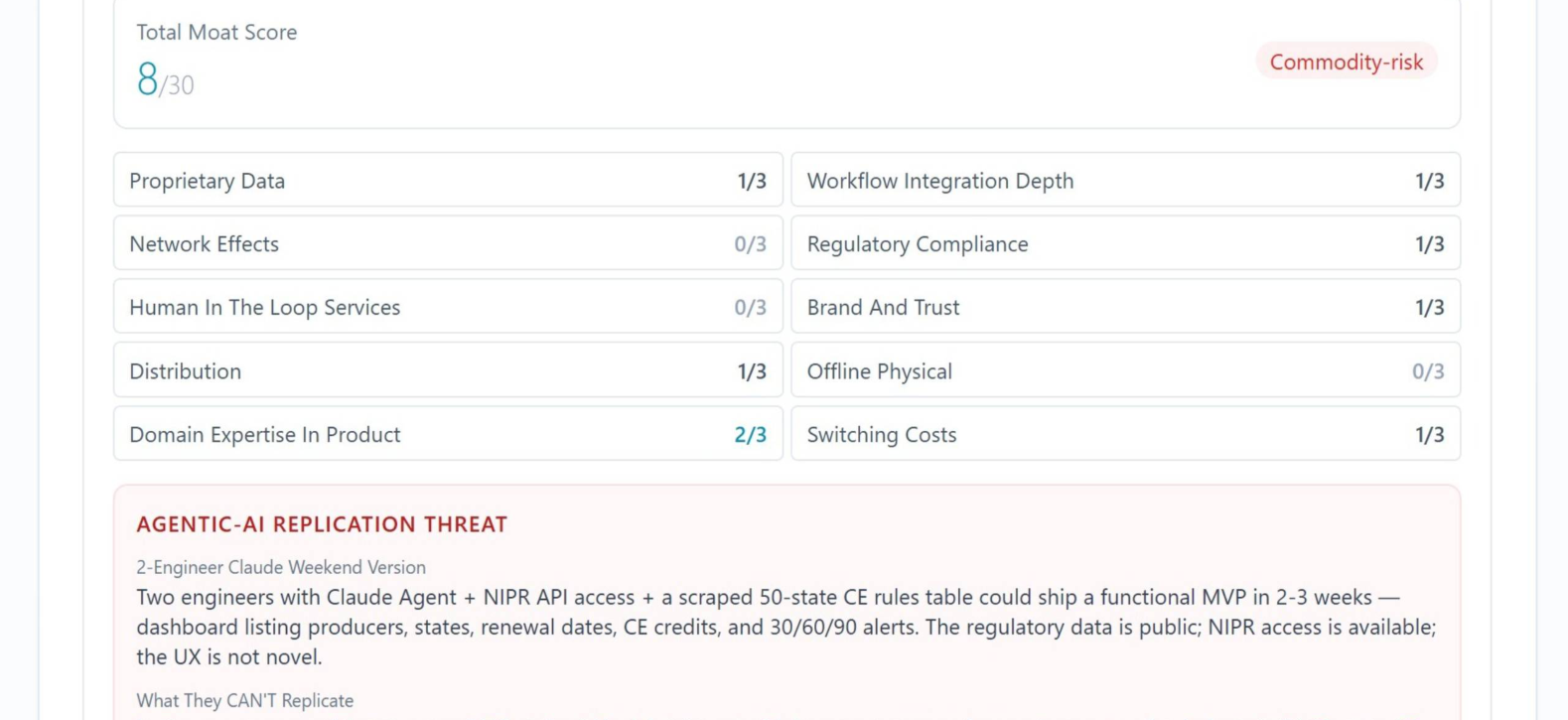
Whether your moat survives an AI clone. The defensibility audit scores the proposed advantage and stress-tests it against a lean team copying the visible product. What could they reproduce? What would remain difficult? The example is a scenario to examine, not a measured prediction of a competitor’s build time.
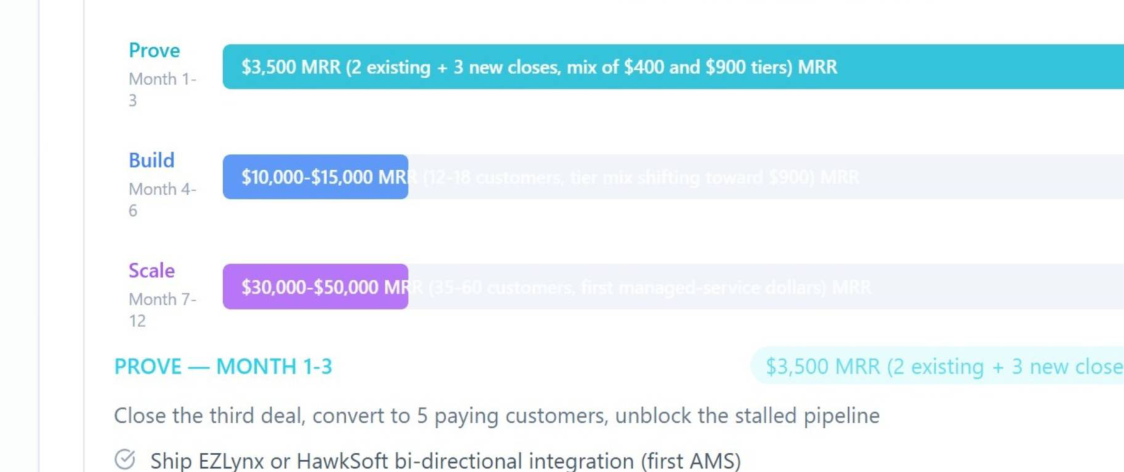
Your first ten customers, and a dated plan to reach them. A design-partner playbook, target accounts, introduction scripts, channel assumptions and a Prove, Build and Scale roadmap. You get work to do, owners and milestones, not “now go find customers.” The revenue figures in the example are targets, not reported results.
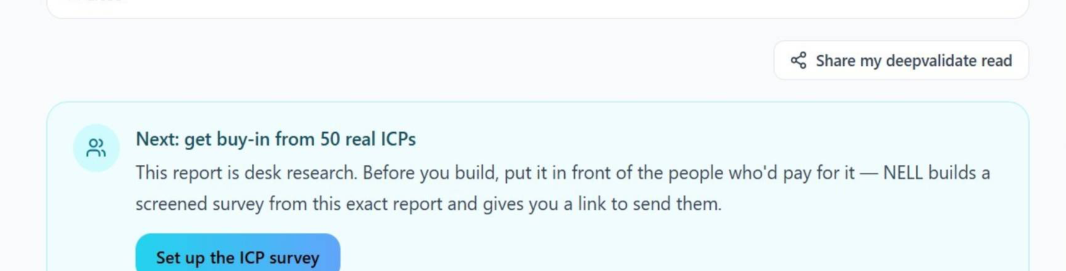
Real buyer feedback, alongside the research. Launchpad also includes the ICP buy-in survey. NELL writes it from your report, you share the link with potential customers, and screened responses feed into a go/kill assessment. This adds customer input to the desk research; it does not automatically recruit the right audience or turn survey answers into sales.
Launchpad also specifies the Minimum Sellable Product, with a clickable wireframe and build plan, and includes research into prior attempts at related ideas. It gives you named accounts, buying-committee information and outreach written for the relevant people.
Thirty verified Apollo leads are included per idea, with a $35 top-up to 1,000. A verified contact is a starting point for outreach, not a qualified sales opportunity.
Pricing: $149 for two validations, one GTM strategy and five IdeaBank briefs.
Pro Builder: Operators in the Trenches
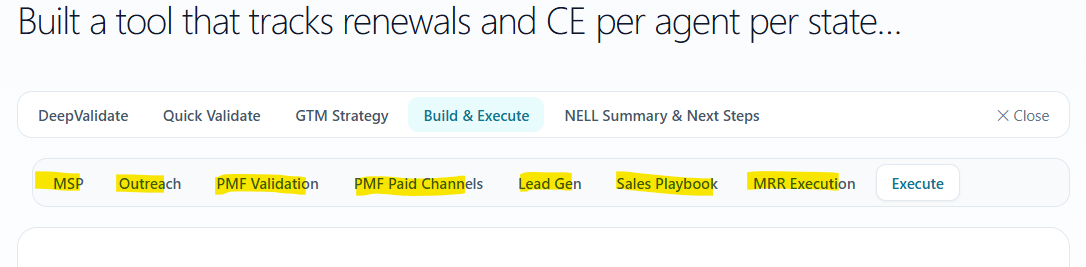
The playbooks that run the launch, plus people to run them with. Pro Builder adds the deeper execution work: PMF validation, paid-channel testing, lead generation, outreach, sales and MRR execution, supported by operators.
The point is to turn the plan into a working routine. What gets tested this week? Who needs contacting? What happens after someone replies? Which result means continue, change the approach or stop spending?
The plan includes a 12-week operating runbook and MRR tracker, one-to-one operator support and weekly office hours. Scope is agreed with the team around the work your business needs.
Pricing: Custom, based on the engagement.
The Tiers at a Glance
| Plan | What You Get | Starting Price |
|---|---|---|
| Quick Validate | A first assessment, dimension breakdown, biggest unknown and next step. No live web research. | Free |
| DeepValidate | Sourced commercial research, market sizing, competitors, pricing, economics, risks and a PDF report. | $49 for the first two reports, plus three IdeaBank briefs. |
| Launchpad | DeepValidate plus GTM strategy, buyer survey, prior-attempts research, product scope and outreach. | $149 for two validations, one GTM strategy and five briefs. |
| Pro Builder | Execution playbooks, an operating runbook and operator support. | Talk to the team about scope. |
These are the pay-as-you-go starting points where applicable; additional credits and recurring plans are separate options.
Pros. NELL connects the research to product priorities, buyer targeting and the work needed to reach customers. You get the positioning, the product scope, the accounts to work and the outreach to start conversations. Operator support is available when you need help running that work.
Limitations. The deeper research, GTM workflow and execution support are not included in the free assessment. DeepValidate, Launchpad and Pro Builder require paid plans.
IdeaProof vs NELL: The Core Differences
Both products address the business case. Here is where their workflows differ.
| What Matters | IdeaProof | NELL |
|---|---|---|
| After assessment | Business planning, branding and marketing materials. | Product scope, GTM strategy, target accounts and outreach. |
| Preparing to launch | Brand strategy, visual identity, advertising copy and other launch assets. | Positioning, feature priorities, a Minimum Sellable Product specification and a clickable wireframe. |
| Customer validation | Research findings and suggested validation tests. | A buyer-survey workflow in Launchpad, alongside the research. |
| Execution support | Generated plans and launch materials. | Execution playbooks and operator support through Pro Builder. |
The comparison is not about which tool produces more documents. It is about which outputs help you move forward.
IdeaProof makes sense when you need to develop the proposition and prepare how to present it. NELL makes sense when you need the research connected to what to build, who to approach and how to run the commercial work.
Which One Should You Pick?
| What You Want | Best Pick |
|---|---|
| Deeper research into the problem, market, competition, pricing and risks before committing to a build. | NELL DeepValidate |
| Research translated into product scope, buyer targeting and outreach. | NELL Launchpad |
| Execution playbooks and operators working alongside you. | NELL Pro Builder |
| Research, business planning, brand identity and marketing materials together. | IdeaProof |
When your question is “What do I build, and how do I get customers?”, NELL connects the research to those decisions and the work that follows.
Start with NELL’s free Quick Validate, then go deeper when the next decision calls for it.
FAQs
Is IdeaProof legit?
Yes, IdeaProof is a real software product for assessing business ideas and creating plans and launch materials. Start with the free assessment and see whether it gives you anything useful for your idea. Look at the reasoning behind the score and check its sources before paying for more. A good-looking report is useful, but you still need to find out whether people will buy.
Can an AI business idea validator replace customer interviews?
No. An AI business idea validator can help investigate alternatives, organize assumptions and identify questions worth asking. It cannot demonstrate that your intended buyers will approve a purchase or continue using the product. Use the research to make those conversations more specific. Ask about recent problems, existing workarounds and purchasing decisions, then test a concrete offer.
Should I use Reddit instead of IdeaProof or NELL?
Use them for different jobs. Reddit discussions can reveal recurring frustrations, workarounds and people worth interviewing. Research tools can help organize those signals alongside competitors, pricing and other market evidence. The important distinction is between someone liking your post and a relevant buyer committing to your offer. Check that respondents match your intended customer and investigate what they already do about the problem. Upvotes alone do not establish willingness to pay.
Keep Reading